
The Frank W. White Collection of Meaders Pottery
Presented as Lots 342 - 412 in our Spring 2026 Auction.
Frank Whitney White (1944-2020) was born and raised on a farm in Cookeville, TN, where he met his wife of fifty-one years, Cissie, in junior high school. He attended Auburn University, earning a Bachelor's degree in Architecture. Excelling at his major, White won a national design contest his junior year and traveled to Paris for the summer to work for a renowned architect, his time there fostering a life-long interest in travel and culture. After serving in the Navy Seabees in Vietnam, he and Cissie moved to Brussels, Belgium, where he worked for the architecture firm, John Portman and Associates. The couple later moved to Karachi, Pakistan, joined by two daughters, Hadley and Whitney. White shared an enthusiasm for travel with his daughters early on, taking them to India, Sri Lanka, and Nepal, and instilling in them a desire to experience different cultures. After spending years as an architect, he combined this background with an interest in local history and art, working in historic preservation during the second half of his career. Starting in the 1990s, he served as the Revolving Fund Director for the Georgia Trust for Historic Preservation for more than a decade, and later as the Executive Director of the Alabama Historical Commission.
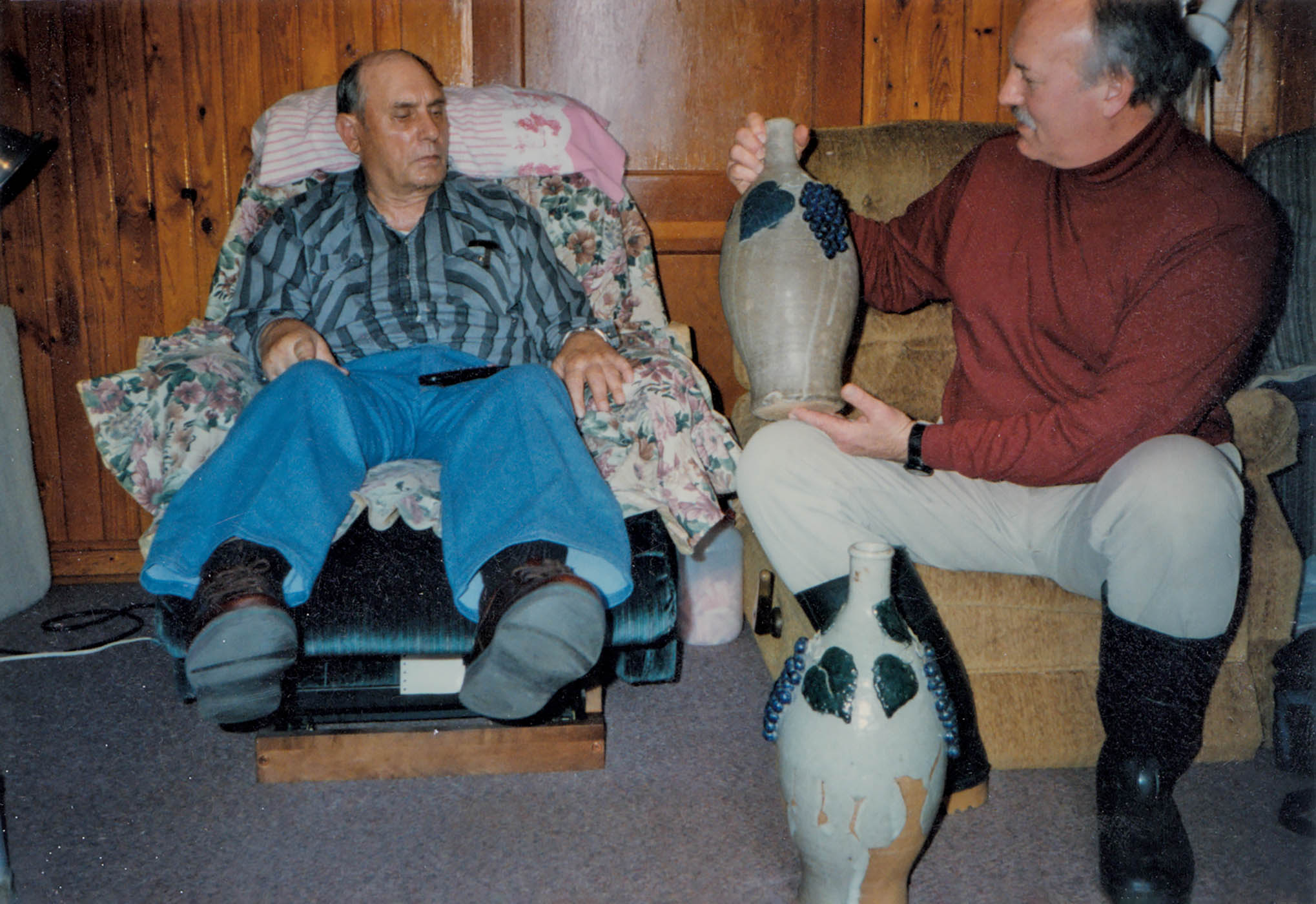
Lanier Meaders and Frank W. White.
A true Renaissance man, White was a lover of nature, an avid hiker, skier, and flyfisher, a sportscar enthusiast, tennis player, music lover, and also an excellent cook. His passion for art and design led him to take blacksmithing classes at the John C. Campbell Folk School, where he learned to make andirons. He also built birdhouses, decorating one in homage to B.B. King and getting the Blues legend to sign it at one of his concerts. He and his wife renewed their wedding vows in 2019 at All Saint's Church, where Frank was a parishioner for over forty years. He had a deep sense of pride in his daughters, something he told them all the time.
White's interest in Meaders pottery blossomed in the mid 1990s during his service at the Georgia Trust for Historic Preservation. In that role, he traveled extensively throughout the state, leading efforts to save imperiled historic properties and connecting them with buyers committed to their preservation. Through these travels, he was drawn to the distinctive regional folk traditions of the state of Georgia, and, ultimately, to the pottery of the Meaders family.
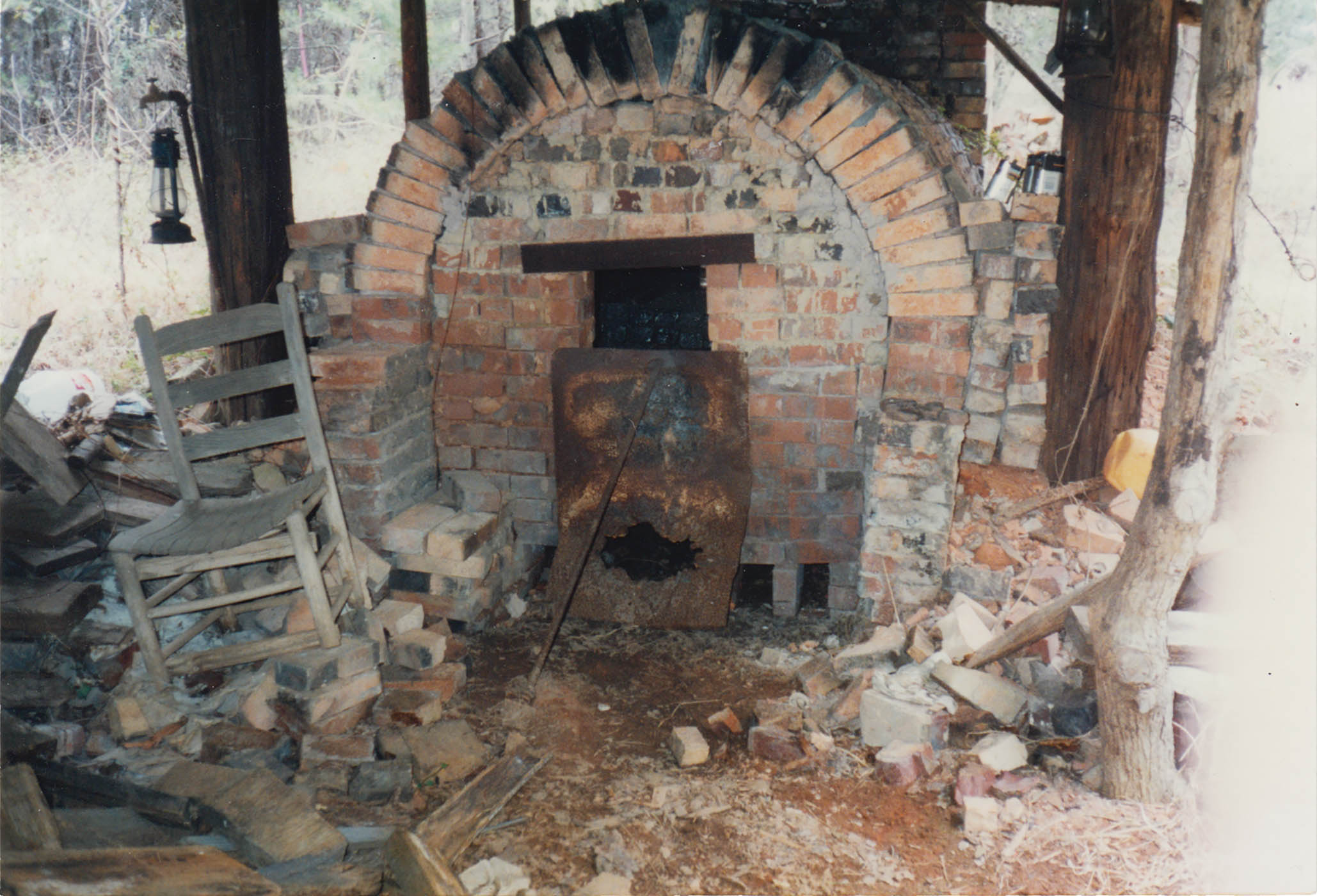
White family photograph of the Meaders kiln.
White came to find their craft endlessly fascinating. Guided by an astute eye for the rare and aesthetic, he pursued pieces by the three leading potters of this Southern potting dynasty: Cheever Meaders (1887-1967), his wife, Arie Waldrop Meaders (1897-1988), and their son, Quillan Lanier Meaders (1917-1998). He focused primarily on a key period, spanning the 1950s to early 1970s, at a time when a greater level of artistic expression was emerging in the family's production. Arie was developing her own voice as an accomplished potter and sculptor; Cheever began producing decorative pieces regularly; and Lanier was becoming increasingly involved with his parents' operation, ultimately assuming a much larger role after his father's death in 1967. The finest and most prized pieces by this family were made during this period.
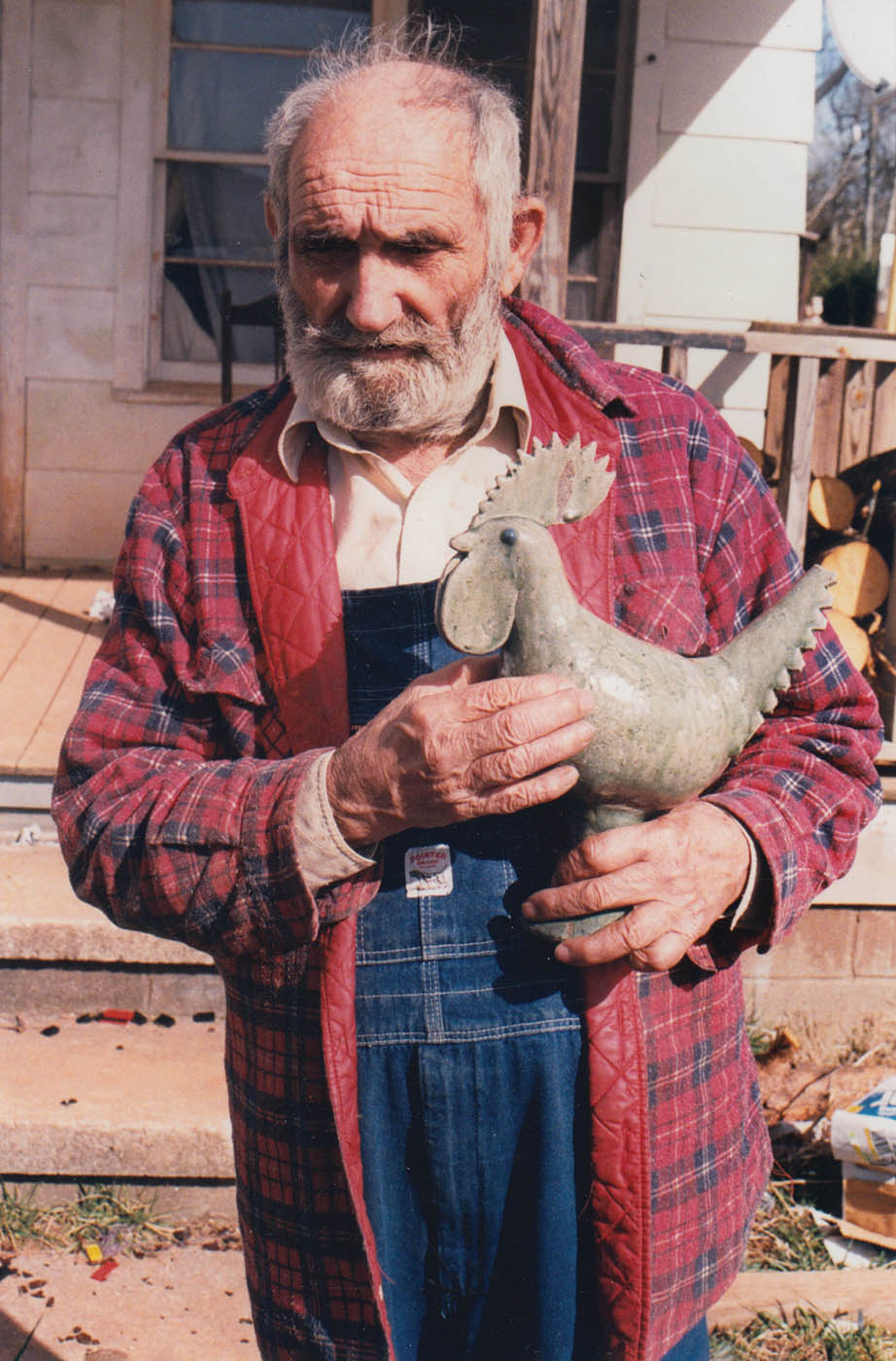
White family photograph of Edwin "Nub" Meaders.
White's favorite objects were the face jugs, and over the years he assembled a group of several significant, early examples by Lanier. One highly important face jug is a collaborative work between Lanier and his mother, featuring rock eyes in the manner of Cheever and cobalt slip decoration by Arie. He also loved vases and the Meaders' distinctive grapes-decorated pieces, of which he acquired many of various shapes and sizes by Lanier. White's pursuit of the best examples he could find led him to acquire a large-sized vase with bird alighting a tree branch, one of Arie's masterworks, which was exhibited in Madison, GA at the Madison-Morgan Cultural Center exhibit, "Georgia Potters: Then and Now" in 2006. His interest in the Meaders' craft, however, extended beyond the pieces themselves; it was also about the history, the process, and the people involved. He regularly attended Meaders kiln-firing events and came to know Lanier on a personal level, visiting him on a number of occasions in the years before the potter's death. As his family said, "Frank never met a stranger." By the time of White's passing in 2020, after tragically succumbing to the effects of Agent Orange in Vietnam, he had amassed over one hundred pieces of the family's work.
For Frank White, collecting was just one small facet of a life well lived. We would like to thank the White family for the opportunity to tell his story and present his landmark collection to the public.
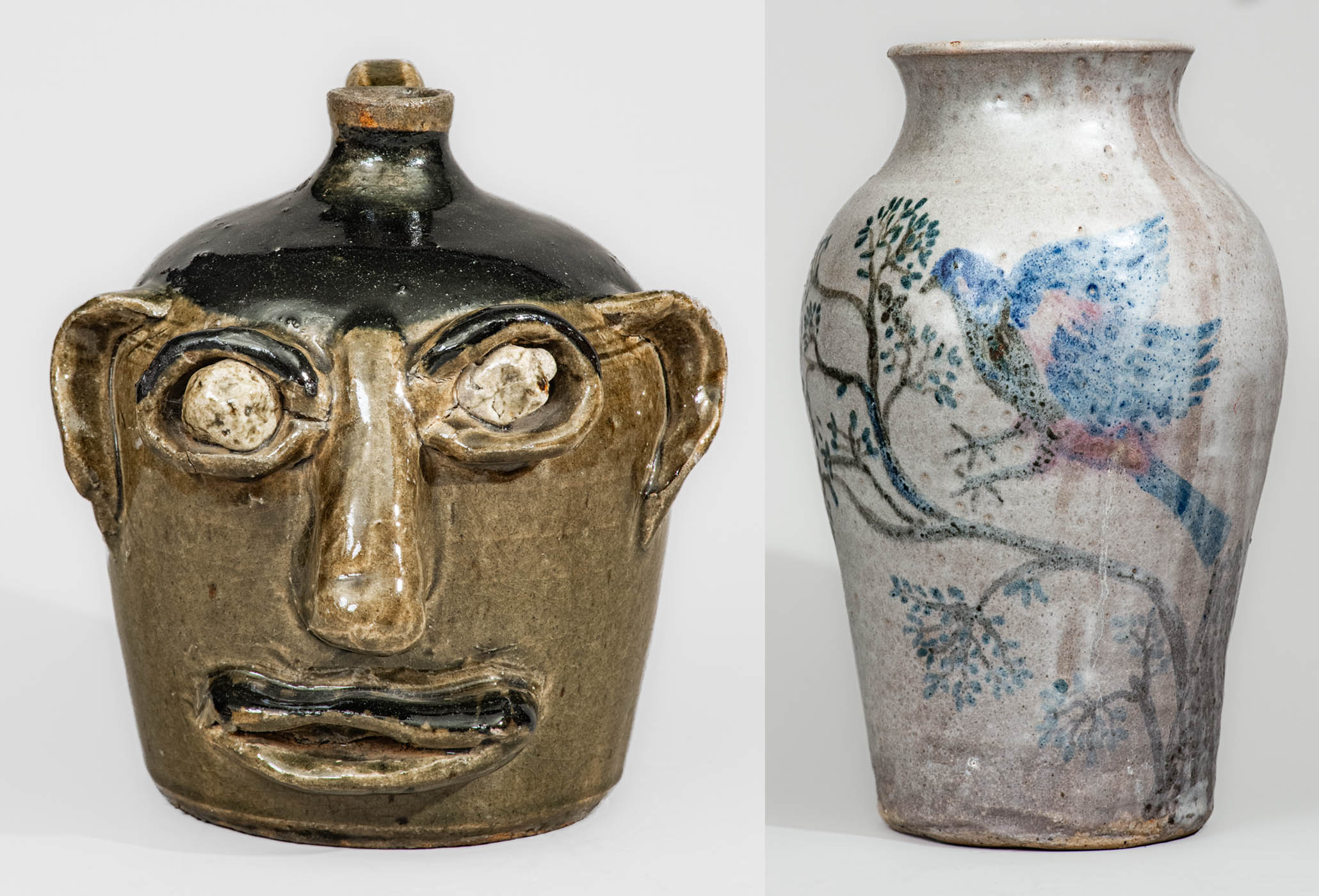
Two iconic examples from the White Collection.